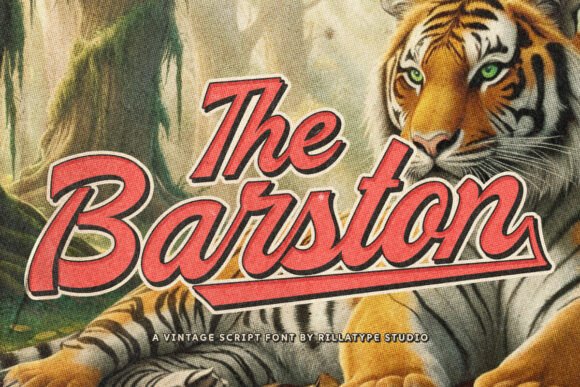
The Barston: A Vintage Script Font with Timeless Appeal
There's something deeply satisfying about a font that feels both familiar and fresh. The Barston is exactly that kind of typeface—a sophisticated vintage script font that channels the elegance of classic retro aesthetics without feeling like a museum piece. If you've been searching for a typeface that brings warmth, character, and a subtle sense of nostalgia to your projects, this might be the one you've been waiting for.
At its core, The Barston draws inspiration from the hand-lettered signage and typographic traditions of mid-20th century design. Its flowing letterforms carry the kind of organic rhythm you'd see on old movie posters, vintage packaging, and the hand-painted signs that once lined the main streets of small towns. Yet there's a refinement in its curves and connections that keeps it from feeling dated. The strokes have a confident, slightly condensed quality—elegant without being fussy, expressive without sacrificing legibility.
What Makes The Barston Stand Out
Every script font has a personality, and The Barston's is unmistakably confident and approachable. The letterforms feature smooth, flowing connections between characters, giving typeset text a natural, handwritten quality. There's a subtle variation in stroke weight that mimics the pressure changes of a broad-nib pen or a steady hand with a brush. This isn't a font that tries to replicate casual handwriting—it's a display font with intention and poise.
The overall style leans vintage, but it avoids the trap of looking overly ornate or difficult to read. Many retro-inspired script fonts sacrifice clarity for decorative flair. The Barston strikes a more practical balance. Its x-height is generous enough that lowercase letters remain distinct at smaller sizes, and the spacing between characters feels carefully considered rather than cramped. That combination of visual charm and functional design is what makes it a genuinely useful creative font for real-world projects.
Where The Barston Works Best
Think about the projects where you want to evoke a specific feeling—warmth, tradition, craftsmanship, authenticity. That's where a premium font like The Barston earns its place in your design assets collection.
Branding and Logo Design
For businesses that want their brand identity to feel established and trustworthy, a vintage script font can do a lot of heavy lifting. The Barston works beautifully in logo design for bakeries, coffee roasters, barbershops, boutique hotels, craft breweries, and artisan product lines. It signals quality and care without needing to say a word. When paired with a clean sans serif font for supporting text, it creates a visual hierarchy that feels balanced and professional.
Packaging and Product Design
Packaging design is one of the strongest applications for this typeface. Whether you're labeling a jar of small-batch honey, designing a wine bottle label, or creating gift box graphics, The Barston brings that handcrafted sensibility consumers respond to. It photographs well, which matters in an era when product images dominate social media and e-commerce listings.
Editorial and Publishing
Magazine headers, book covers, and chapter titles can all benefit from the character The Barston provides. In editorial design, a script font like this works as a headline or accent typeface rather than body copy. Use it for pull quotes, feature story titles, or section dividers to inject personality into layouts that might otherwise feel clinical.
Digital and Social Media
On social media graphics, Instagram posts, Pinterest pins, and website hero sections, The Barston catches the eye immediately. Its vintage charm stands out in feeds dominated by minimalist sans serif typography. For bloggers and content creators looking to develop a recognizable visual style, incorporating a distinctive script font into templates and branded graphics can strengthen audience recognition over time.
Events and Personal Projects
Wedding invitations, event posters, greeting cards, and personal craft projects are natural homes for a font like this. If you sell handmade goods or run a small creative business, The Barston can elevate your printed materials from generic to memorable.
Choosing the Right Font Pairing
A display font like The Barston rarely works alone. Most projects need at least one complementary typeface for body text, captions, or supporting information. The key is contrast without conflict.
Try pairing The Barston with a simple, geometric sans serif font for modern projects. Something with clean lines and open letterforms will let the script font take center stage while keeping longer passages readable. For a more traditional feel, a classic serif font with moderate contrast can complement the vintage personality without competing for attention.
Avoid pairing it with other ornate or highly decorative typefaces. Two expressive fonts fighting for dominance creates visual noise, not harmony. Let The Barston be the star, and choose supporting typefaces that play a supporting role.
Readability and Practical Considerations
Any experienced designer will tell you that beauty means nothing if people can't read your message. The Barston performs well as a display font at larger sizes—think headlines, logos, and signage where the text is meant to be seen at a glance. At smaller sizes, test it carefully. Script fonts generally lose clarity below certain thresholds, so reserve this one for situations where size isn't an issue.
Pay attention to letter spacing and line height when setting text in The Barston. Because the characters connect and flow into one another, slightly more generous spacing can improve legibility, especially in all-caps settings or when used at intermediate sizes.
Licensing and Commercial Use
Before incorporating any font into a commercial project, review the licensing terms. The Barston is a commercial font, which typically means you'll need the appropriate license for your specific use case—whether that's a single client project, ongoing brand work, or digital product templates. Most premium font licenses cover standard commercial use, but it's worth confirming details if you plan to embed the font in apps, software, or products for resale.
Investing in properly licensed fonts isn't just about legal compliance. It supports the designers and foundries who create these tools, ensuring they can continue developing high-quality typefaces for the creative community.
Final Thoughts on Working with The Barston
Good typography doesn't shout—it communicates. The Barston is the kind of font that does its job with quiet confidence, adding warmth and character to a design without overwhelming the message. It's versatile enough for a wide range of projects, from professional branding to personal crafts, and its vintage personality feels timeless rather than trendy.
If your current font library leans heavily toward modern typography and clean sans serifs, adding a well-crafted script font like The Barston gives you more creative range. Test it out, experiment with pairings, and see how it fits into your workflow. Sometimes the right typeface is all it takes to transform a good design into something that truly resonates.